
Kerbing the way for kerbs
Kerbs mean more than meets the foot. They are ways of helping pedestrians and cyclists on their journeys as they tell them a message from the different types and sizes of kerbs. Kerbs are great way of sending out different forms of messages, used on roads, in car parks and on the streets – they all have a meaning.
USES:
Lets have a look at some of the uses for kerbs, what do they actually do, and why are they there?
- Kerbs form the edge between a pavement and the road; they retain the edge of the top layers of a pavement.
- Act as a demarcation for pedestrians and road users to locate where the road and path separation is. It distinguishes the carriageway and footway.
- Provides a check/channel for surface water management.
- Prevents accidents where vehicles could leave the carriageway.
TYPES:
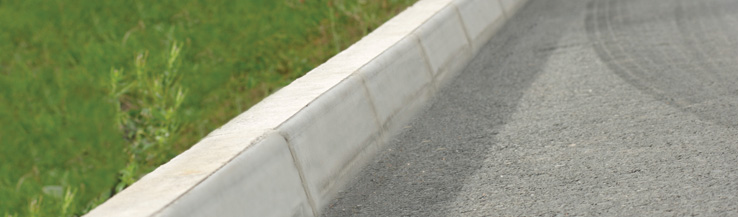
There are a variety of types of kerbs, from different shapes, sizes and material. A few years ago, the popular types of kerbs were made from natural stones like granite but now they are mostly pre-cast concrete.
The natural stones are durable and better quality but can be expensive, and Highway Authorities now dress the kerbs to a standard profile and finish, the difficulty is when they have to fix/repair older kerbs, and these do not match the standard profile.
Pre-cast concrete has now become popular; the hydraulically pressed kerbs are durable, cheap and strong, though they are not as strong as pressed concrete.
Steel kerbs have also become increasingly used for busy areas where the kerb lines are commonly used such as, towns, cities, motorways and dual carriageways – anywhere where there is heavy traffic.
Although you see plain kerbs around your local town and roads, textured and decorative kerbs are becoming popular. They look great, different and more noticeable but they are of course, more expensive.
There are also special kerbs, like the side offlet kerbs, which are designed to keep street litter out of the sewers. High containment kerbs are designed to protect vulnerable footpaths and sensitive roadside equipment, you could find these anywhere from fuel pumps to dangerous curves.
For all you bus travellers, you may have noticed special kerbs for bus stops, these helps pedestrians for ease of access and for the bus driver to align the bus correctly and to calculate the gap between the kerb and vehicle entrance.
What other interesting facts do you know about kerbs?
The Benchmark – Five of the Most Innovative Urbastyle Bench Solutions
The Benchmark – Five of the Most Innovative Urbastyle Bench Solutions
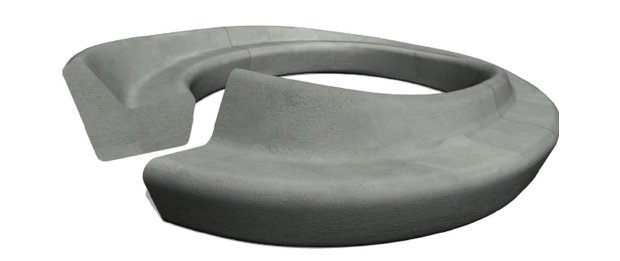
Thinking outside the box is the essence of great design. It’s what creatives do with regular ease, and in doing so make our lives that little bit more interesting. Take the humble bench for example – it can be a rectangular block of concrete created simply for the purposes of sitting on and filling a space. Or it can be something else, something more beautiful, as much a piece of street art as it is a functional object. Here are five of the most innovative designs for urban benches that offer both beauty and practical solutions.
Bench Circular
As the name suggests this is simply a circular bench, a straightforward and attractive structure which provides adequate seating in parks or urban areas. What makes this uncomplicated piece of design so effective is that its centre is used for planting trees and shrubbery – essential for greener air in urban areas.
Bench Ouvertura
This bench is designed to fit securely over ditches or uneven surfaces, creating an eye-catching piece of street furniture that is safe to sit on and makes practical use of space. The size of the bench means that many people can sit together.
City Scape Concrete Bench
Stylish and contemporary this bench is a response to the need to create decorative seats in urban and conservation areas. The bench is surprisingly comfortable to sit on and has a slightly rounded style which means people don’t necessarily have to sit beside each other but can still see one another.
Bench Soft Seat
This unique bench is designed both for indoor and outdoor areas such as squares, parks, shopping centres, even art galleries. What is so clever about this bench is at first glance it looks like it’s made out of soft cushions but it is in fact made from concrete. Beautiful to look at this bench brings a certain warmth and charm to even the most sterile of spaces.
Bench B. Flex
This elegant concrete bench comes in a variety of colours and can be arranged in countless different ways. The parts fit together like building blocks to create a unique urban space. It is probably fair to say that this interesting piece of design could easily be mistaken for street art but it also acts a comfortable bench.
Bomax are Urbastyle street furniture specialists. Find out more about the Urbastyle Street Furniture that you can purchase through Bomax.
Five of the Best Urban Spaces
Five of the Best Urban Spaces
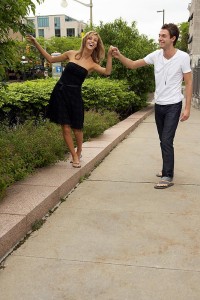
Creating a functional and beautiful urban space involves the design and coordination of all the things that make up our cities and towns. Buildings, streets, public space and landscape are the elements that have to be considered when designing the ideal urban space. Any development or regeneration work must be carried out in a way that is sympathetic to the existing buildings and landscapes. This is particularly true in conservation areas. Here are five examples from around the world of how to make good use of public spaces.
Puerta Del Sol
The Puerta Del Sol originated as one of the gates in the city wall that surrounded Madrid in the 15th century. It’s located in the very heart of the city. The square is actually almost semi-circular in shape and owes its current form to the major renovation work carried out between 1854 and 1860. All work since has been carried out sensitively allowing the area to maintain its character. Due to its city centre location and stunning architecture the Puerta del Sol is a fine example of how to utilise public spaces.
Princess Street Gardens
Princess Street Gardens is a lovely place to sit in the summer and people-watch whilst overlooked by some of Edinburgh’s most beautiful buildings. Green areas are essential in all large cities and this is one of the finest you’ll find anywhere.
Du Pont Circle
DuPont Circle is a traffic circle, park, neighbourhood, and historic district in Northwest Washington, D.C. At its centre is an elegant marble fountain which currently serves as a popular meeting point for locals and tourists alike. The DuPont Circle utilises the space expertly and has numerous trees planted around an otherwise urban area.
Millennium Park Chicago
Built on a site that was controlled by the Illinois Central Railroad for almost 150 years, Millennium Park is seen by the people of Chicago as the crowning glory of their city. The 24.5 acre Millennium Park is a magnificent modern park with state of the art facilities, unique public artwork and beautiful gardens.
London Olympic Park
Transforming wasteland on London’s East End into an international sports venue was a massive undertaking. From transport to and from the village to ensuring roads and pathways are adequate required planning on a mammoth scale. The resulting Olympic park, with its landscaped wildflower gardens, stands as a monument to the overall success of the games.
Street Furniture has come a long way over the last few years, making communal areas such as squares, parks and streets come to life. Bomax supplies a wide range of Urbastyle Street Furniture.
The environmentalist’s guide to paving
The environmentalist’s guide to paving
I am text block. Click edit button to change this text. Lorem ipsum dolor sit amet, consectetur adipiscing elit. Ut elit tellus, luctus nec ullamcorper mattis, pulvinar dapibus leo.
Taking or manufacturing any stone and moving it from its source to another location will have an impact on the environment. Paving is everywhere in our towns and cities and is in many ways the very heart and soul of the places where we live and work.
Paving is clean, practical and can look pretty when sensitively constructed within its surrounding environment. As natural stone weathers, it becomes aesthetically pleasing – it is also very durable and if properly maintained can last for centuries.
There is no doubting the significance of the role that paving has played in our history and the importance of the role it continues to play today. It is however more important now than ever to consider the environmental implications for this industry.
Sourcing the Stone
There are a number of environmental and ethical issues to consider when buying pavement stone that has been imported from some of the developing nations. Take Indian sandstone for example – popular because of its quality and price, it is quite often quarried by children as young as ten, working in very poor and inhumane conditions.
This is before considering the environmental impact of spoiling the landscape through illegal dumping, polluted groundwater, and the significant energy consumption of transporting the stone half way around the world.
When buying paving it really is worth taking the time to research how and where the stone was sourced before making a decision about whether to use it.
Getting the Right Balance
It isn’t just the extraction site that becomes damaged – heavily concreted areas don’t support wildlife and often result in vegetation being removed. This prevents water from seeping into the soil naturally and recharging groundwater supplies. Paved surfaces also increase the speed and amount of water that rushes down gutters and into storm drains during a rain storm which can lead to flooding.
Allowing for some vegetation, planting some trees or plants and having some green areas where possible is a simple and effective solution to this. By using permeable paving blocks and permeable grass grids for hard standings you can reduce the environmental damage when paving over an area.
Like most environmental issues when it comes to paving it’s all about having the right information in order to make informed choices.
Bomax carry out rigorous checks to ensure that all of our materials and products are sourced ethically.
Tips for creating the perfect conservation sympathetic urban space
Tips for creating the perfect conservation sympathetic urban space
Look around most towns and cities in the UK and you will find examples of poor planning. Buildings of special architectural or historical significance overshadowed by concrete structures such as multi-story car parks and out-dated shopping malls.
In order to create urban spaces that are sympathetic to the special architectural and aesthetic qualities of the area it is important that we learn the lessons of the past. There are of course many examples where urban regeneration has preserved or even enhanced the surrounding area. Good preparation is the key to ensuring that urban spaces in conservation areas work for the communities who live in them.
Plan and Visualise
The planning stage is paramount when it comes to blending old with new. Edwardian and Victorian structures are often listed, however it is not enough to simply protect these buildings in isolation. For example tall buildings are unlikely to be sympathetic to their surroundings and can dominate a conservation area. Any planning applications submitted should always contain a detailed description of how it will relate to the area.
Demolition
Demolition of unlisted buildings can sometimes help the character of an area, but in some cases it may diminish it. It is important that each case is considered on merit, for example what will the proposed development contribute to the area and how will it blend with its surroundings? Space between buildings, materials used, design and scale are all important factors when deciding on replacing old buildings with new.
Alterations
It is important to remember that urban spaces are there for us all to enjoy, they are places where communities live, work and socialise and should not be treated as museum pieces. If an extension can be undertaken sensitively without destroying the character of the building then there is no reason it shouldn’t go ahead. Changing the use of a building can also bring economic benefits but again needs to be done sympathetically – keeping original features like windows and doors where possible.
Green Areas
Landscaping green open spaces brings beauty and environmental benefits to urban areas. Making improvements to paved areas and introducing street furniture that is in keeping with the area can also add real value.
From cobbles to flags: The evolution of street surfaces
From cobbles to flags: The evolution of street surfaces
The history of our streets and how they have evolved is a subject of great fascination. People, buildings, roads and surfaces change over time and with it the look and fabric of the community. The streets we live in provide the backdrop to our daily lives and really make a statement about the area we inhabit.
Cobblestone curiosities
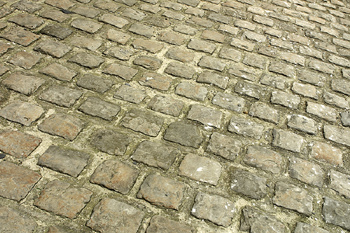
In Victorian times cobbled streets were part of the fabric of our towns and cities throughout the UK. Dickens novels depict scenes set among narrow cobblestone streets in densely populated areas, lined with tenement blocks and crowds of people. Today cobbled streets have an iconic status in the hearts of the British.
The word cobblestone comes from the English word cob which is used to describe small, round lumpen shaped items. These stones were known as cobbles and their shape and durability made them perfect to construct roads with.
Cobblestones were first used to build roads back in the early part of the 15th century, traditionally set in sand and sometimes bound in water. They offered many advantages as they did not develop ruts or get muddy like dirt roads. They made for extremely durable surfaces and weren’t prone to cracking in freezing conditions.
Fashionable Commercial flags
As new building techniques and materials became available cobbled stones began to fall out of favour. Granite setts, or Belgian block became the stone of choice, with its rectangular shape and smooth surface making it ideal for creating patterns that are aesthetically pleasing.
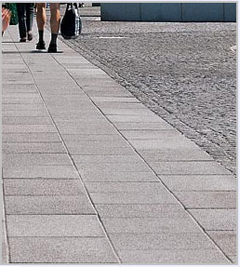
Today granite setts, sometimes called ‘commercial paving’ or ‘commercial flags’, are ubiquitous in towns and cities throughout the UK. Popular in parks, driveways and town centres where they are framed by kerbs, their versatility and design potential make them an ideal stone to use for street surfaces.

With a choice of finishes, colours and sizes it is easy to see why this stone became so popular. From a design point of view it is pleasing to the eye and nothing brightens up a tired old street like the arrival of a new surface.
Traditionally sourced from various parts of the UK including York, Gloucestershire, Wales and Aberdeen, increasingly we are beginning to see stone imported from more exotic parts of the world including India and China.
Flag stones can be bought either as new or reclaimed depending on the effect and look you are trying to achieve. More traditional type cobblestones also still have a place in modern Britain and are commonly used in restoration projects.
Top five European cities for cyclists
Top five European cities for cyclists
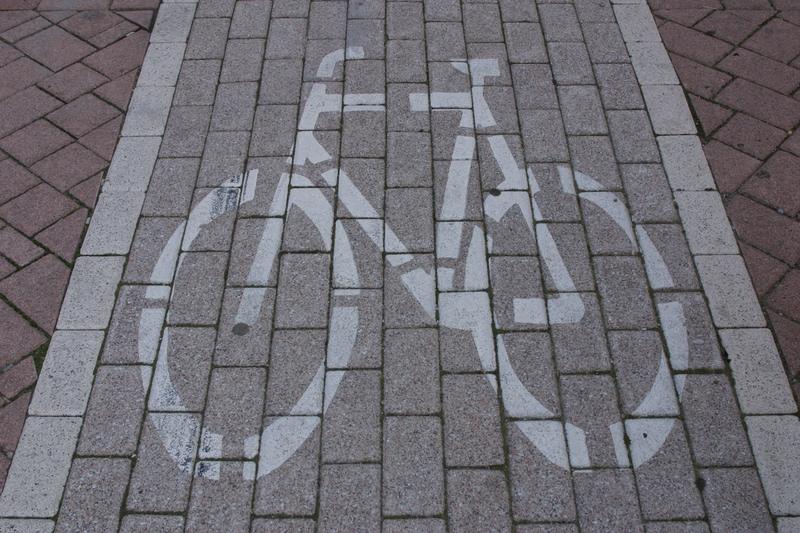
Cities are not always the most bicycle friendly environments. In fact, it is probably fair to say that in the past cities and cycling simply didn’t work together. However, with green issues becoming ever more relevant and the future of our planet at stake, many European cities have prioritised cycle lanes to make their centres more hospitable to cyclists. Bomax offers cycle lane solutions that are cost effective
1. Copenhagen
Cycle lanes will take you wherever you want to go in the Danish capital. The Dronning Louises Bro is a bridge that traverses the lake to the north of the city and has more than 35,000 bicycles cross it each day, making it the busiest bicycle street in the western world. The area is full of attractions and shops and to really see the city just go with the bike flow.
2. Barcelona
Although a very busy city, the provision of excellent stretches of cycle lanes make Barcelona a very safe place to explore on two wheels. For €16 a day you can rent out a bicycle, see some of the great cityscapes and enjoy all the shops and restaurants this Catalan city has to offer. Before you make your way to the beach, check out the old fisherman’s neighbourhood of Barceloneta.
3. Amsterdam
Perhaps unsurprisingly the Dutch capital is one of the most bicycle friendly cities in Europe, with cycle path generally separated from the pedestrian pavement by kerbs or an area of vegetation. Cycling is an extremely popular mode of transport around the city, but it is also well worth taking a ride outside the city where you will see some stunning landscapes and of course a variety of windmills.
4. Paris
Cycling is very popular with Parisians and many of them use bicycles to commute to work. Like all major European cities, much consideration has been given to cycle lanes with properly enforced kerbs for safety. Take a cycle along the bank of the river Seine and through the trendy Marais district, stopping off for an espresso and a pastry in one of its cafés. There really is no better way to experience Paris.
5. London
One of the world’s true cosmopolitan cities, London has really adopted the bicycle as its own in recent times. The famous Boris bikes are now a familiar sight throughout the streets of the capital. London has given much thought and planning to cycle lanes as a means of beating congestion and as a result, everyone from city traders to east end hipsters have fallen in love with the bicycle.
How can street furniture revitalise urban spaces?
How can street furniture revitalise urban spaces?
A rapid rise in the popularity of online shopping has resulted in the decline of the high street in recent years. As boarded up shop fronts have become a familiar sight, the challenge to rejuvenate and revitalise our high streets is at the forefront of government thinking.
Street furniture from top design companies like Urbastyle can really help enhance the look and character of a high street or any urban space. Benches, bollards, planters and seats are all objects that, when positioned sensitively to their surroundings, can really say something about the space they occupy. This makes the area more enticing for shoppers and retailers thinking on moving into the area.
Practical solutions
As well as contributing to the overall charm and beauty of an area, street furniture is a practical solution to some of the problems encountered in inner city urban areas. For instance, cleanliness can be a problem in any town or city, with litter often dropped carelessly. Something as simple as well-designed and well-placed bins can scale litter problems back dramatically, helping an urban area to really look its best.
Bollards provide security and protection by separating traffic and pedestrian pathways, and come in a range of designs that can help increase the attractiveness of the area. Planters alongside kerbs and buildings can make even the most densely populated of urban jungles a more enjoyable and pleasant environment, providing a splash of colour to boost the area’s overall appeal.
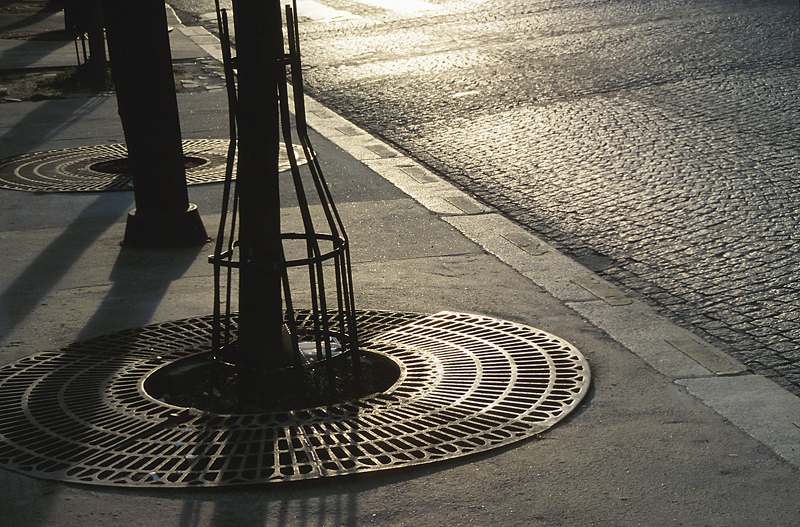
Street furniture provides the public with facilities such as seats and benches, an essential provision for those who have been traipsing around shops all day. It also helps to establish the area as a social hub and is a sure-fire way to attract visitors.
Forward thinking
As with any design project it is essential that a lot of thought and planning goes into the process in order to create the right kind of vibe and aesthetic. Too much street furniture can cause a clash in styles and begin to look cluttered. It is vital that the street furniture is cohesive and laid out in a manner that complements the environment it occupies. The surrounding architecture, type of shops and street lighting should all be taken into account when using street furniture to revitalise urban spaces.
When implemented correctly, street furniture can improve the feel and atmosphere of an area and boost its aesthetic appeal. Much like street art, street furniture can help to attract subsequent developments, establish quality and raise standards.
Kerb comparisons: Granite kerbs vs. concrete kerbs
Kerb comparisons: Granite kerbs vs. concrete kerbs
There are many different types of road kerbs used in Britain today. An unsung hero, the humble kerb carries out a number of important duties on our streets and motorways. They retain the carriageway edge to prevent ‘spreading,’ and they also act as a barrier between road traffic and pedestrians or verges.
Other areas of responsibility for the kerb include providing a physical ‘check’ to prevent vehicles leaving the carriageway and forming a channel along which surface water can be drained.
Once upon a time the most popular type of kerb employed to carry out these tasks were made from natural stones such as granite. As time has passed however, natural stones have been replaced by precast concrete. So which is best? Is there really any difference and does one do the job better than the other?
Granite kerbs
As a natural stone, granite kerbs usually tend to be more expensive than precast concrete kerbs. Whilst kerb stones that are specifically manufactured to do the job in hand are measured to a specific length and style, older kerbs – some of which have given over 100 years service – do not necessarily match this standard profile. This means replacing or repairing them can cause problems.
However the granite Kassel kerb is the natural equivalent of the standard concrete Kassel kerb – a unique, no-gap bus stop kerb for safe and easy passenger access – and is the perfect solution for use in conservation areas or where there is repair work needed for existing granite kerbs or pavements.
A natural stone granite is extremely durable, aesthetically pleasing, and is sensitive to its environment. Recreating the beauty of this natural stone is not easy.
Concrete kerbs
Precast concrete kerbs are now more commonly used due to their durability and cost. They can be manufactured to specific requirements meaning they can be tailor made to suit a particular job. They are easily shaped and moulded and come mostly in a clean and aesthetically pleasing grey. You can get more decorative colours but these are more expensive and are generally only used in prestige and ‘heritage’ schemes.
The evolution of concrete kerbs continues apace – for example a new generation of concrete kerbs know as scan kerb has recently entered the market. A ‘stick down’ kerb that is cost-effective, easy to install and reduces noise and dust contamination, it is set to take the industry by storm.
The argument between granite and concrete kerbs could really be characterised as an argument about old versus new, vintage versus modern or retro versus contemporary. They each have their own merits and advantages, and it really does come down to the individual job they’re required for.
Urbastyle Street Furniture – Spicing up the Streets
Urbastyle Street Furniture – Spicing up the Streets
Street furniture is changing; it has become more of an innovative piece of artwork that is visually far more attractive, than the traditional plain furniture. As street furniture suppliers, Bomax recognise the worth of Urbastyle Street Furniture.
It’s all about creativity, design and standing out
It looks like local councils are taking more pride in the way they present their streets and roads to people, in style and sophistication. Do your streets and towns need a little character to brighten up things up? Street furniture can include:
Below is a selection of Urbastyle Street furniture:
Urbastyle Bollards
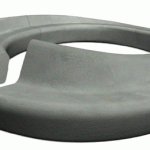
Urbastyle Bench
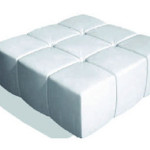
Urbastyle Seat
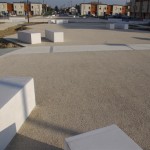
Urbastyle Street Furniture
Urbastyle’s LED benches create a great ambiance at night, especially in parks and town centers. The low lighting is subtle but creates attention; its glow could be relaxing and definitely lights up a miserable dark night. You can just imagine taking a walk in the park, the benches have a little more personality and at night, you will feel a little safer and maybe you can even stop to have a sit down and reflect on your thoughts, on these lovely LED benches.
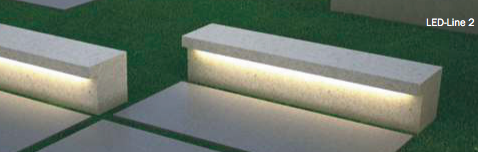
Urbastyle LED bench
Perhaps the street can do with some design. These crossed benches are like 4 seats in one, they can also be used as planters to spice things up a little – a seat and planters used together can create quite a bit of art for the passer bys to have a gaze at and admire the presentation. With some plants in the hollow interior of the planters, the towns and streets will look far prettier and will create more of a positive atmosphere.
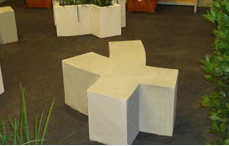
Urbastyle Crossed Benches
When it comes to bollards, you’d be surprised at the range of bollards out there. In this blog, Bollards of London, you’ll find policeman bollards, camouflaged, lipstick shaped, Royal bollards – you name it. Point being, bollards are more interesting to people than you may think. They generate interest and like the stabilo bollards below, can also be used as seats.
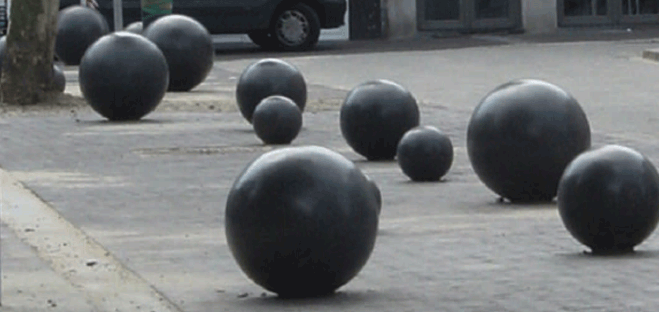
Street furniture is far more stylized, full of design features and spectators enjoy viewing the creativity that councils are now coming up with to make their streets and towns more visual.